It arrives wet
White cedar shingle comes off the truck in bundles, wrapped tight and still carrying water from the mill. Nailed up like that, each shingle shrinks on the wall over the first summer. The gaps between them open, the courses stop lining up, and the wall looks like it was laid by two different crews. So the bundles go into the yard behind the shed, under the open lean-to, with the straps cut and spacers between the layers.
Six weeks in the yard
Six weeks in moving air takes most of that water out. We weigh a sample bundle when it arrives and again before it leaves; when the number stops dropping, it goes to the site. In a wet spring that can be eight weeks, in a dry August four. The schedule carries it as a lead time, like the windows, so nobody is waiting on a truck the week the wall is ready.
For a year the house looks unfinished on one side. Then it does not.
Five inches, and the corners
We lay white cedar at a five-inch exposure, two nails a shingle, an inch up from the course above, so the nails never see the weather. Corners are woven: the shingles alternate which side covers the edge, course by course, instead of meeting at a trim board. It takes longer and it is the detail people touch when they walk past.
Silver, on its own
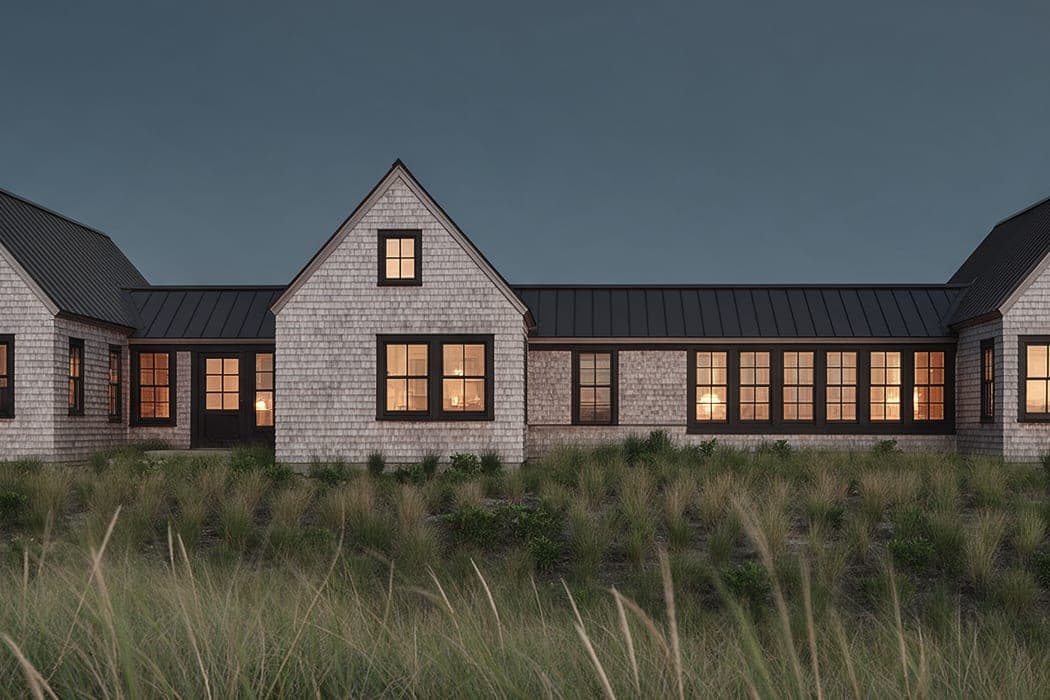
We do not stain it and we do not oil it. Left alone, white cedar goes from honey to brown in the first summer, then to grey, and by the second or third year to the silver you see on old houses by the water. The side facing the ocean goes first. For a year the house looks unfinished on one side. Then it does not.
When we do not use it
Not every house wants shingle. Whaler's Cottage is clapboard because it was clapboard in 1840, and the district review agreed. Vineyard Barn House is black board and batten because it is a barn. Cedar is a material, not a style, and we use it where it belongs.