The hole before the house
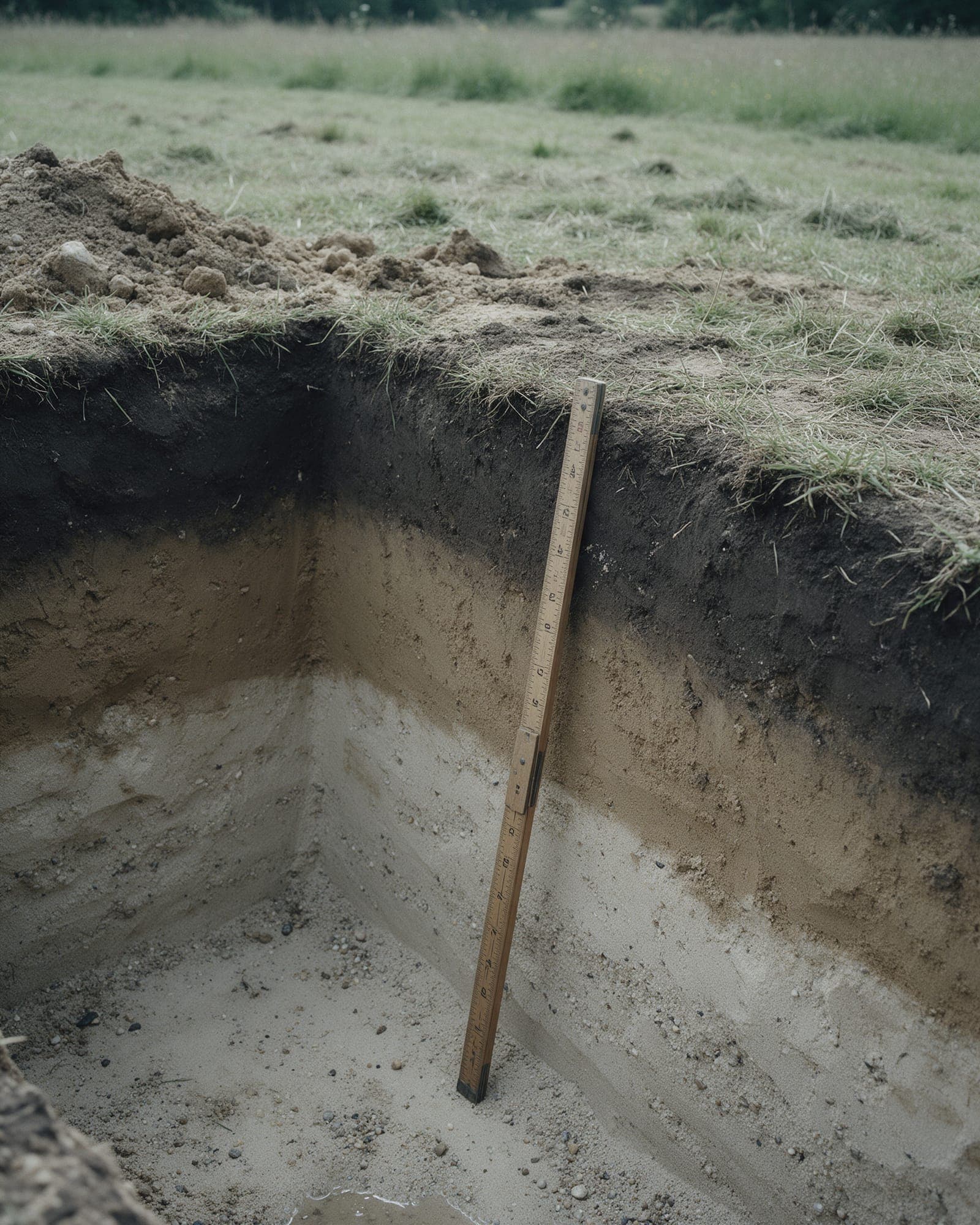
Before we price a house on a lot, we dig a test pit. A small excavator, an hour, a hole about five feet across and as deep as the machine reaches, usually twelve to fourteen feet. The county health department watches the one that matters for the septic system. We watch it for the house. Then the hole is filled, the topsoil goes back on top, and in two weeks you cannot tell where it was.
Reading the wall
The side of the pit is a cross-section of the lot. On the North Shore it usually reads dark topsoil for the first foot, then a tan sandy loam, then the glacier: sand and gravel the ice left behind, sometimes with a boulder in it. We write down the depth where each layer changes and what it is. Firm sand at eleven feet, like the pit at Harbor Hill Meadow, is good news for a footing and good news for a septic field.
Found in a test pit, a soft layer is a line in the price. Found in week eight, it is a change order.
Water, and when
The number we care about most is the depth to groundwater. At Field Lot in Bridgehampton it was nine feet, which means no basement, a crawlspace at most, and a septic design that keeps its distance from the water table. Groundwater moves with the seasons, so we note the date. A pit dug in September reads drier than the same pit in April. The planner carries that number into the price as an allowance, not as a guess.
What it changes in the price
A clean pit lets us price the foundation as drawn. A soft layer, like the organic pocket under the north-east corner at Creek House, means deeper footings and an engineer's letter. A boulder means a few days and a machine. None of these is a disaster when it is found in a test pit. Found in week eight of a build, each one is a change order with a date on it.
Why we dig before we draw
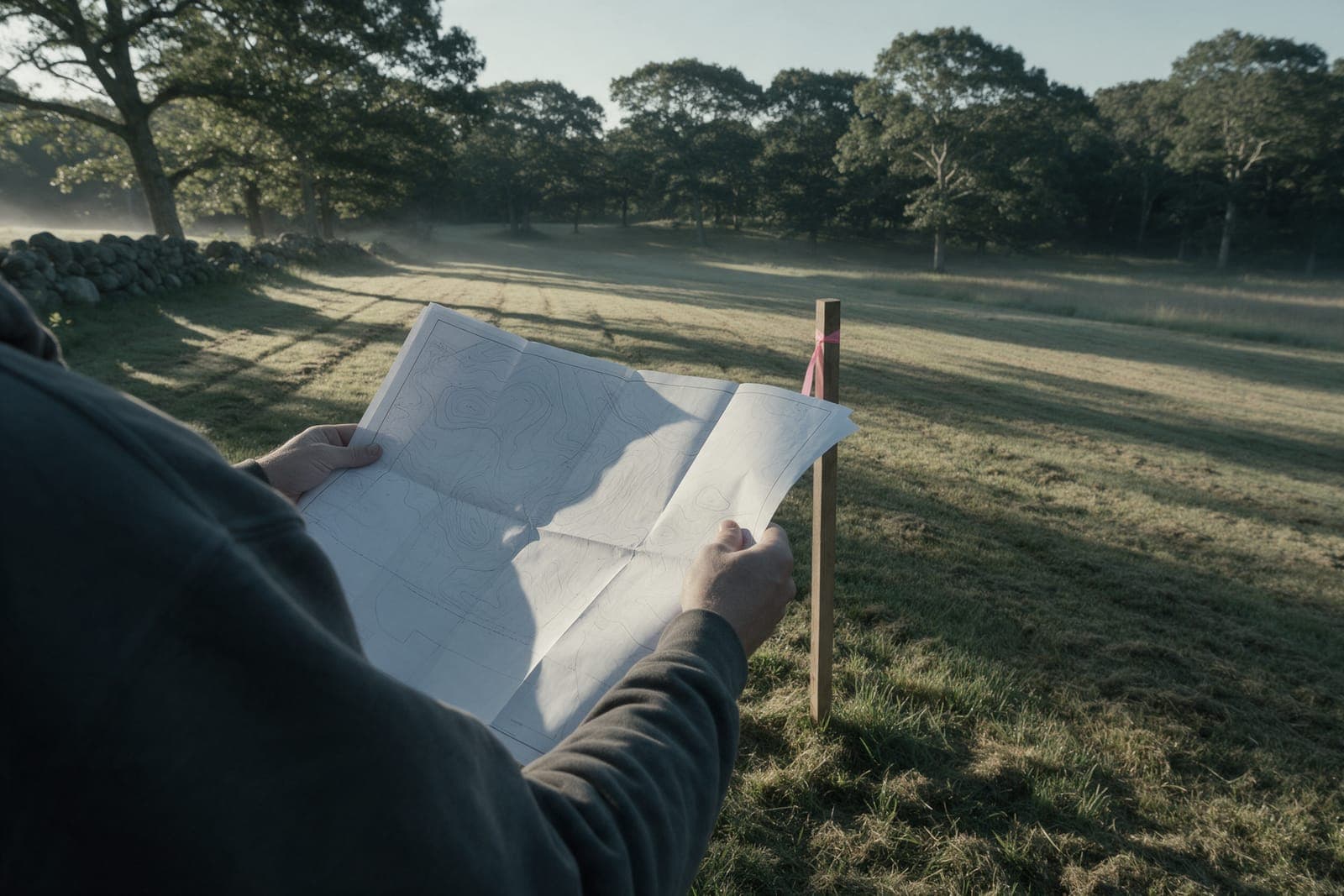
A survey shows the shape of the ground and nothing about what it is made of. Two lots with the same contours can need very different foundations. We would rather spend an hour with a machine than a month redrawing. The pit log goes into the feasibility letter, and it stays with the house: the next people to dig there will want it.