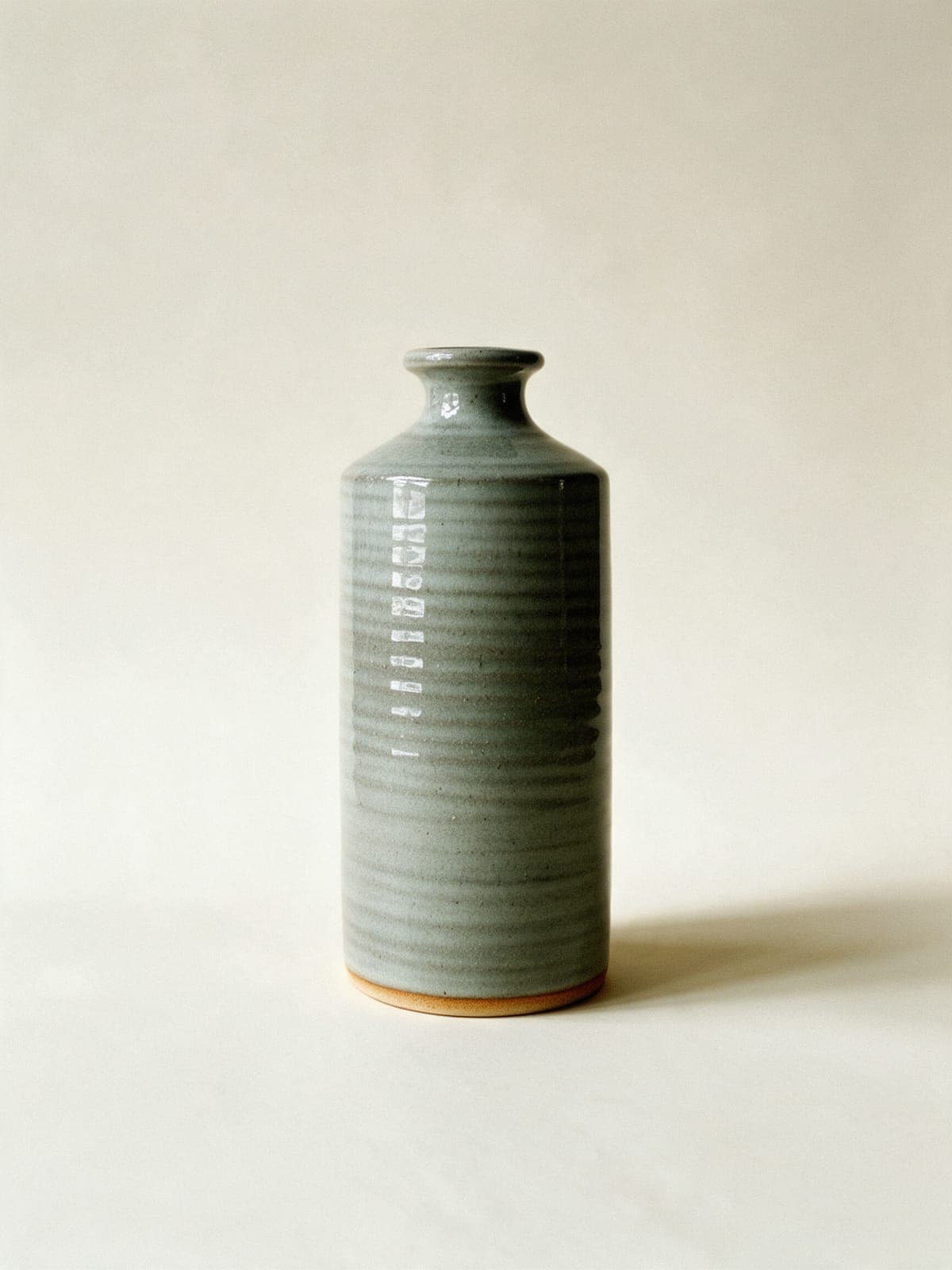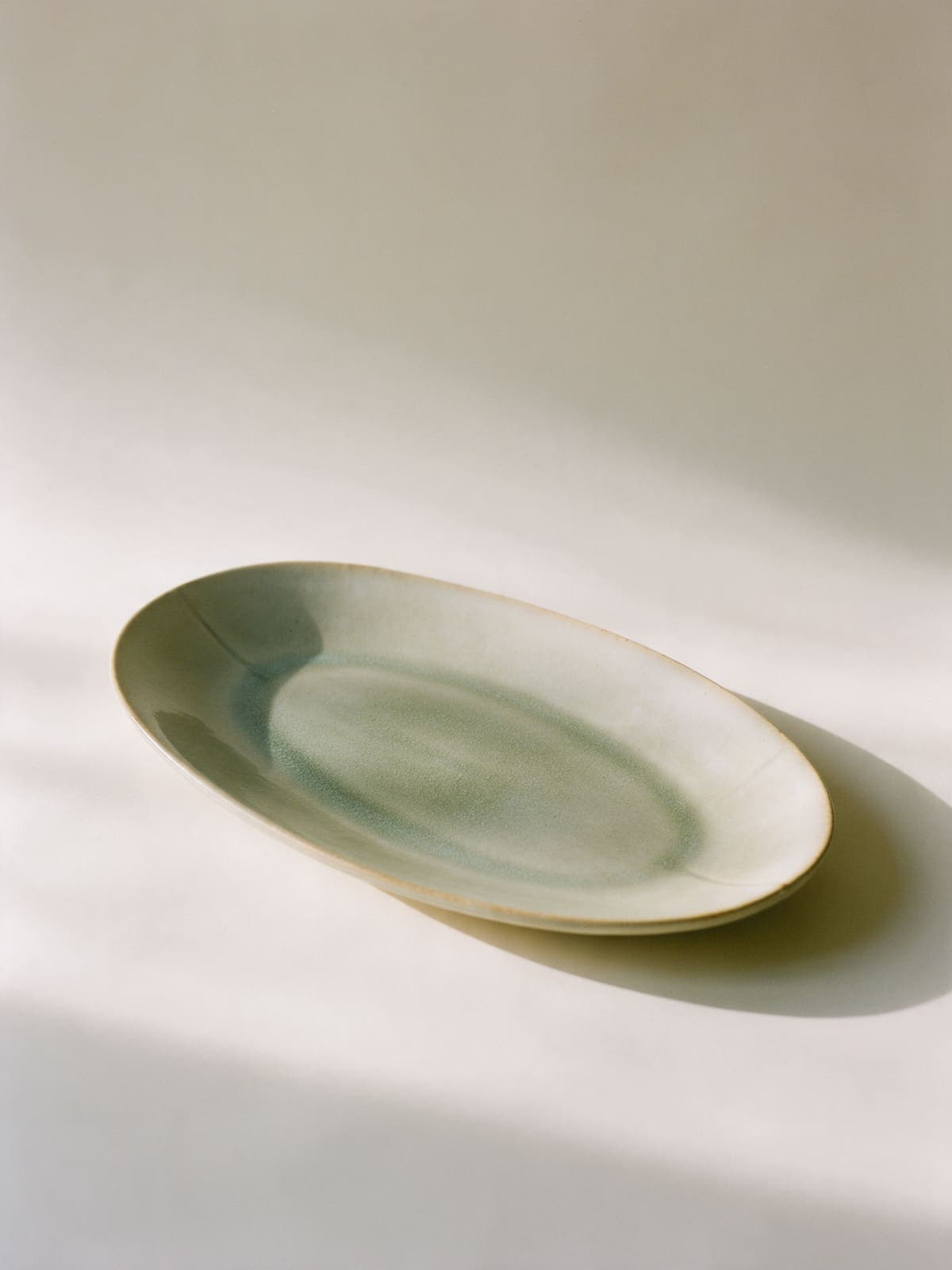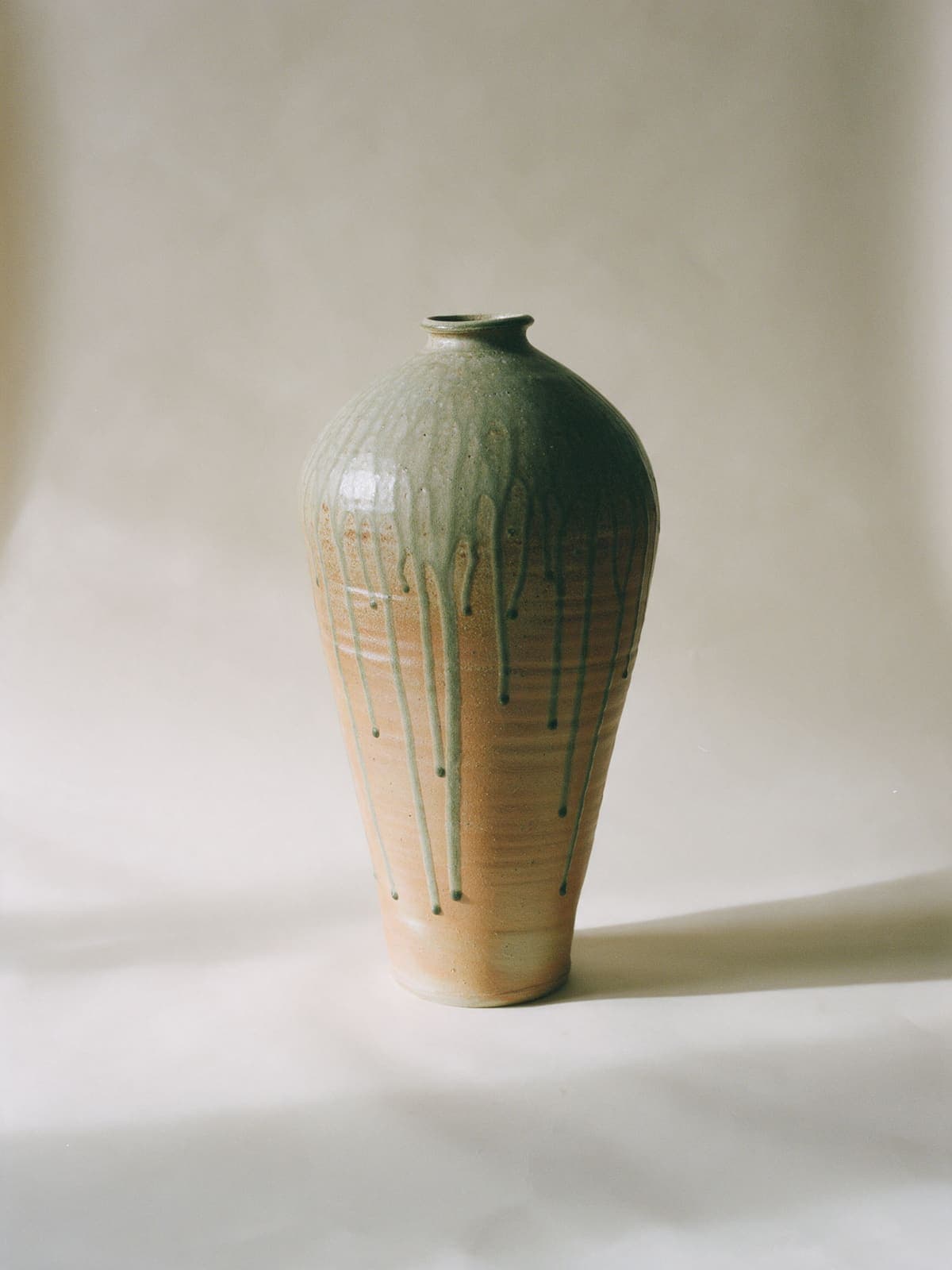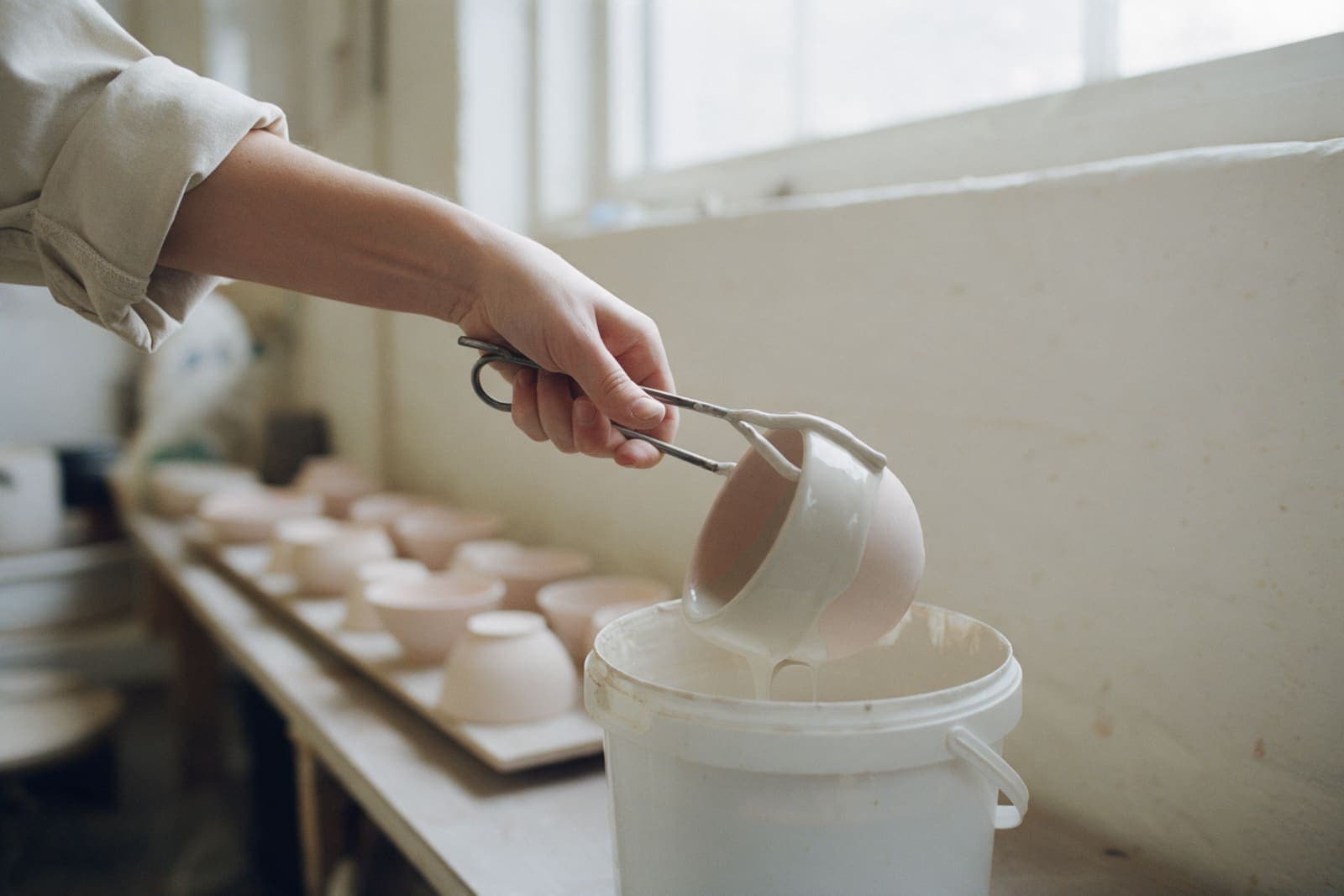
We stopped fighting the drip. At cone 10 the ash glaze moves, and where it lands is the kiln’s decision, not ours. The shelf under each pot keeps the evidence.
This firing we loaded the tall vessels at the cool end and the bowls at the hot end. Eleven of fourteen came out with the run we wanted. The other three are seconds, at 30% off.
The kiln decides where the glaze lands.
The ash comes from the shop stove: white oak offcuts from the bench, mostly, with some walnut. We sieve it twice, wash it three times to take the lye out, and mix it with feldspar and a little clay so it stays on the pot until it melts.
Cone 10 means the kiln has taken in enough heat to bend a cone of that number, around 2,345°F. The glaze starts to move well before that. If we hold the top temperature for twenty minutes, the run goes another centimetre. We hold it for twenty minutes.
Next firing we try a thinner coat on the floor vessel’s shoulder, where three drips met and pooled at the foot. That one stuck to the shelf. We ground it off and sold it as a second.